Roof Colors for Brick Houses: A Homeowner’s Guide

At Carden Home Improvement, we help Connecticut homeowners choose roof colors that make brick homes look their best, and last. Our licensed team replaces most roofs in one day, uses TAMKO® products, and backs work with a 10-year workmanship warranty (plus enhanced manufacturer coverage through our Diamond Contractor status). We install roofs across Plainville, Bristol, New Britain, and nearby towns, so we know how New England light, seasons, and neighborhood styles affect color. Below, you'll get clear answers first, then the details.
Quick answers upfront:
- Warm red/orange brick looks best with
charcoal, weathered wood, slate, or dark brown shingles.
- Cool gray or brown-gray brick pairs well with
pewter, driftwood, dark charcoal, or black.
- If your trim is white or cream,
charcoal is the safest, most curb-appeal-boosting pick.
- Test large shingle samples in sun and shade before you commit.
Understanding Your Brick Exterior
How brick colour and tone influence roof colour choices
Brick isn’t one flat color, it has undertones. Stand back 15–20 feet and decide: is the overall brick warm (reds, oranges, tans) or cool (grays, brown-grays, muted taupes)?
- Warm brick works well with richer, grounded roof shades that
complement (not copy) the brick, think
charcoal over cherry red, or
dark brown over orange-red.
- Cool brick likes crisp, neutral tops:
black, graphite, pewter. These create contrast without clashing.
Tip: If your brick has multicolor flecks, choose a shingle blend that includes one of those flecks, it quietly ties the palette together.
Architectural style, climate and neighbourhood context
- Colonial/Cape: classic lines favor
charcoal, slate, weathered wood.
- Tudor/Craftsman: textured or variegated shingles (wood-look browns, autumn blends).
- Modern farmhouse/Contemporary: high-contrast
black or deep
graphite for sharp, clean edges.
In Connecticut’s four seasons, darker roofs hide staining and snow lines better. Also consider your block: if most homes lean neutral, a wildly bright roof can feel out of place, and HOA rules may limit extremes.
The Role of Roof Colour in Curb Appeal
Why roof colour matters for brick-facade homes
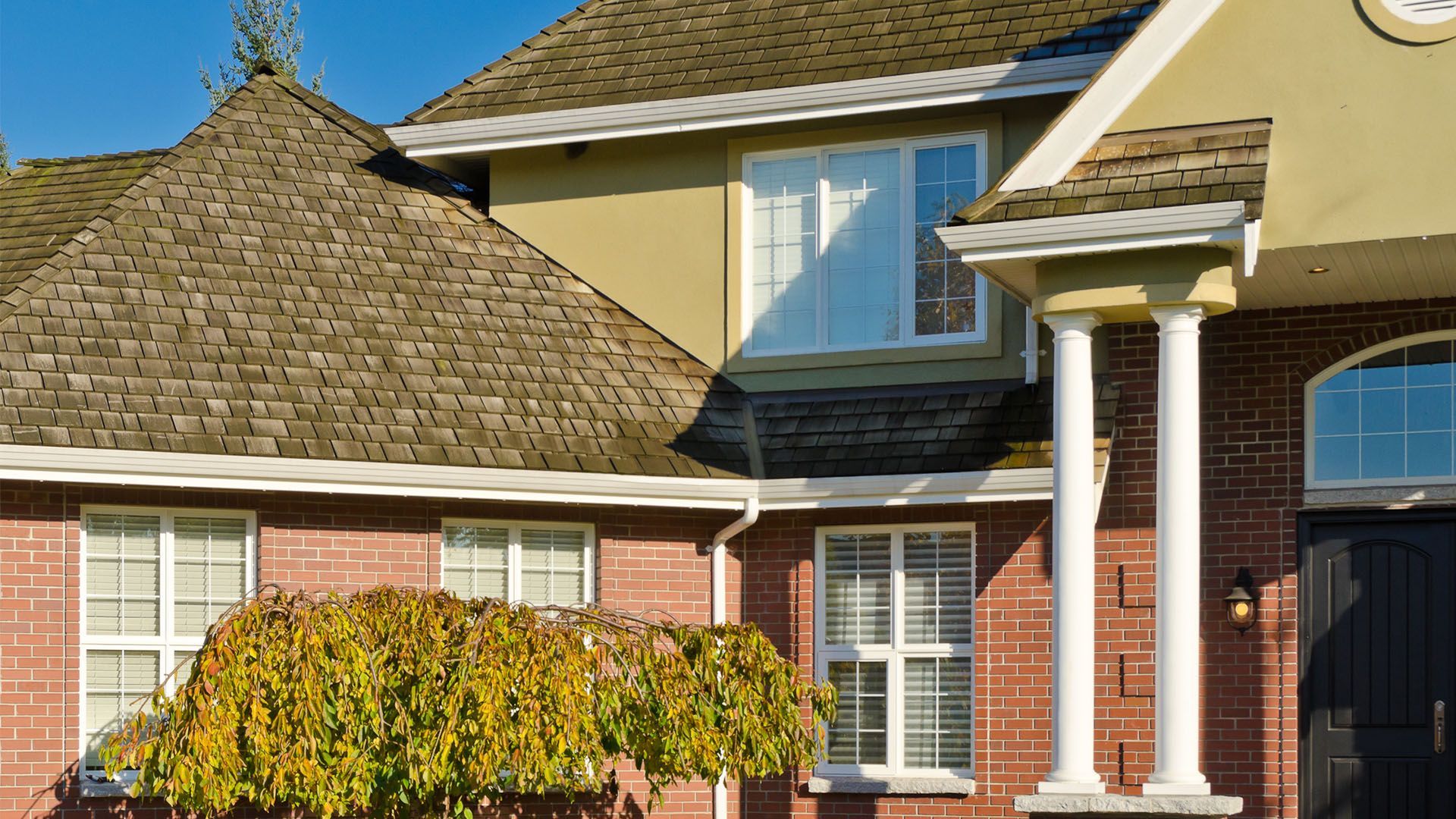
Your roof can be up to 40% of what you see from the curb. On brick houses, the roof is the main “fabric” that either anchors the façade or distracts from it. The right shade creates a coordinated, finished look and can make trim and windows pop.
Common pitfalls with mismatched roof and brick combinations
- Matching too closely: red brick + reddish shingles = muddy, heavy look.
- Too light: pale roofs on brick often wash out and show dirt faster.
- Ignoring undertones: cool graphite shingles over orange-warm brick can feel harsh; the reverse can look flat.
Choosing the Right Roof Colour Palette
Harmonising roof colour with warm-toned bricks (reds, oranges, yellows)
Try: Charcoal, Weathered Wood, Dark Brown, Autumn Blend, Aged Copper accents (metal). These shades ground warm brick without competing. If you want a subtle, timeless combo, charcoal is first choice.
Matching with cool-toned bricks (grays, brown-grays, muted hues)
Try: Pewter, Graphite, Onyx/Black, Driftwood (cool blend). These create a sleek, coordinated roof-and-brick tone that reads clean and modern.
Impact of surrounding features, trim, gutters, landscaping
- White/cream trim: pairs with charcoal, pewter, black for crisp contrast.
- Bronze/black gutters & windows: lean graphite or onyx.
- Natural landscaping (stone walls, mature trees): weathered wood and slate blends feel organic.
Trending Roof Colour Options for Brick Homes
Classic neutrals for timeless appeal
Charcoal, Weathered Wood, Slate. These offer high resale confidence, hide streaks, and work across most brick house exterior colour matches.
Bold & modern tones for contemporary brick styles
Onyx/True Black, Graphite, Deep Steel. Great with pale or gray brick and black window packages. Use when you want strong lines and modern curb appeal.
Metal, tile, and shingle finishes – how texture affects colour perception
- Architectural shingles add shadow lines that make color read deeper.
- Metal standing seam (in charcoal/black/bronze) looks darker and glossier; excellent on modern additions or porches.
- Tile/Slate (or slate-look shingles) bring multi-tone variation that softens large roof planes.
Practical Considerations Before You Commit
Roof material type, durability and maintenance
Architectural asphalt shingles are the most common for brick homes here, balanced cost, wind rating, and color palette depth. Metal offers longevity and bold lines; ensure snow-management details (snow guards) are planned.
Sun exposure, climate influence and fading
South-facing slopes appear lighter at noon and show more fading over time. Darker shingles mask minor color changes and streaking better in our climate.
Regulatory, homeowner-association and neighbourhood constraints
Check HOA rules and local norms. Many communities prefer neutral roofs to protect overall home values. When in doubt, charcoal or weathered wood is the safest bet.
Implementation Tips: From Sample to Installation
Testing colour in different lighting and seasons
Ask for full-size shingle boards or multiple bundles. View them:
- Morning shade vs. midday sun vs. late-day warmth
- From the street and from upstairs windows
- Next to brick, trim, gutters, and garage door
Working with your roofing contractor and colour samples
Bring photos of homes you like. A pro can match the roof colour palette for brick dwelling you’re targeting and suggest similar blends that perform better on your roof pitch.
Long-term maintenance of roof colour and brick coordination
Install proper ventilation and algae-resistant shingles to reduce streaking. Keep gutters clean so dirty overflow doesn’t stain brick or eaves. If you repaint trim, stay within your chosen palette.
Final Thoughts: Making a Confident Choice
Summary of key takeaways
- Identify your brick’s undertone (warm vs. cool).
- Choose a contrasting, neutral-leaning roof (charcoal, slate, pewter, weathered wood) for the best curb appeal.
- Test big samples in real light and consider your architecture, neighborhood, and climate.
- When unsure, charcoal is the most forgiving and future-proof.
Encouragement to view your home holistically, brick, roof, surroundings
Think of the roof as the frame around your brick façade. The right shade should coordinate roof and brick tones, highlight trim, and sit comfortably on your street, today and ten years from now.
Ready to See Options on Your Home?
Carden Home Improvement can bring full-size shingle samples to your driveway and help you compare brick house roof color ideas in your real lighting. Get a free, no-pressure estimate and a color consult from our local, licensed team. Call (860) 200-8827 or request a visit at cardenroofing.com, and let's choose the best roof shade for your brick home with confidence.
Frequently Asked Questions
Will a dark roof make my brick house look smaller or too heavy?
Not if you choose the right contrast. Dark roofs actually recede visually when paired with lighter trim (white, cream, or pale gray), which makes the home's architectural lines stand out. The key is avoiding a match that's too close to your brick tone, charcoal over warm red brick creates definition, while a reddish-brown roof would flatten the whole facade. In Connecticut neighborhoods, dark roofs are standard and read as classic, not heavy.
Can I choose a roof color that will help with energy costs in Connecticut?
Roof color has a modest impact on cooling costs here compared to southern climates. Connecticut homes need more heating than cooling, so a darker roof that absorbs winter sun can actually be beneficial. For summer, proper attic ventilation and insulation matter far more than shingle color. Focus on curb appeal first, the energy difference between charcoal and lighter gray shingles is minimal in our four-season climate.
How do I test roof colors if I can't get large samples to my house?
Ask your contractor to bring full shingle bundles or sample boards at least 2×3 feet. View them on your driveway next to your brick at three times of day: morning, noon, and late afternoon. Take photos from across the street with your phone, the camera flattens tones the same way your eye does from a distance. If samples aren't available, drive your neighborhood and note addresses of brick homes with roof colors you like, then ask your contractor to match those shingle lines.
My HOA requires approval, which roof colors are most likely to pass?
Charcoal, weathered wood, and slate gray are the safest bets. These neutral tones blend with nearly all neighborhood styles, maintain property values, and rarely trigger HOA pushback. Avoid pure black (can look stark), bright or reflective colors, and anything that contrasts sharply with surrounding homes. Before submitting, check if your HOA has a pre-approved color list or requires specific manufacturer lines, this can fast-track your approval.
If I replace my roof now, will the color still look good if I paint my trim later?
Yes, if you choose a true neutral roof. Charcoal, slate, and weathered wood work with white, cream, beige, gray, or even black trim because they sit in the middle of the value scale. Avoid choosing a roof that only works with your current trim color, if you later switch from white to dark bronze trim, a roof that depends on high contrast may suddenly feel off. Neutral roofs give you flexibility for future updates to trim, doors, or shutters without needing to re-roof.