Ridge Vents vs Box Vents: What Works in Connecticut (CT)

If you're trying to decide ridge vent vs box vent for your Connecticut home, here's the simple truth: both can work well, but only when the roof layout, the attic airflow path, and the soffit intake ventilation are set up the right way.
A quick note on why we're qualified to write this: Carden Home Improvement is a CT-based contractor (Plainville) and our team has 10+ years of home improvement experience working on real roofs in real New England weather. We're also registered in Connecticut (HIC#0699243).
Quick Takeaway for CT Homeowners
If your home has good soffit vents (intake) and a long roof ridge, a continuous ridge vent is often the cleanest and most even way to vent an attic. If your roof has short ridges, lots of hips/valleys, or broken-up sections, box vents can be the better fit, because you can place them where the attic actually needs exhaust.
| If your roof/attic looks like this… | Ridge vent usually fits best | Box vents usually fit best |
|---|---|---|
| Long, straight roof peak (ridge) | ✅ Yes | Sometimes |
| Lots of hips/valleys, multiple roof sections | Sometimes | ✅ Yes |
| Strong, continuous soffit intake | ✅ Yes | ✅ Yes |
| Limited/blocked soffits (common in older CT homes) | Needs extra planning | Needs extra planning |
| You want fewer roof penetrations | ✅ Yes | No (more penetrations) |
| You want a low-profile look | ✅ Yes | No (more penetrations) |
When Ridge Vents Usually Win
A ridge vent shines when the roof design lets air move in a smooth path: soffit vents → up the rafter bays → out at the roof peak. On many CT homes with a decent ridge length, a ridge vent gives more even exhaust and helps reduce "hot spots" in the attic.
A ridge vent is often a strong choice when:
- You have continuous soffit venting (or plenty of eave vents) and it's not blocked by insulation
- The ridge line is long enough to provide steady exhaust
- You want fewer visible vents and fewer individual roof penetrations
When Box Vents Usually Win
Box vents (also called roof box vents, static vents, and often "turtle vents") are helpful when a ridge vent can't cover the attic evenly. This happens a lot with complex roof layouts in CT, especially capes, colonials with additions, and roofs with multiple peaks.
Box vents often make more sense when:
- The ridge is short, chopped up, or doesn't run over the attic area that needs venting
- The roof has hips and valleys that create "dead zones" for airflow
- You need targeted exhaust in specific sections
The #1 Mistake to Avoid with Either Option
Adding exhaust without enough intake is the fastest way to waste money on ventilation. When intake is weak, your attic will still try to exhaust air, but it may pull from the wrong places (like gaps to the home below). That can increase humidity, lead to condensation on the roof deck, and feed problems like mold growth and wood rot.
A quick intake checklist:
- Are soffit vents present and open (not painted shut)? Learn more about
how soffit vents work and why they matter.
- Is insulation blocking the eaves?
- Are baffles installed to keep an air channel open at the roof edge?
Why Attic Ventilation Matters in CT's Climate
Connecticut homes deal with two different ventilation battles: winter moisture and summer heat.
Cold-Season Risks (Moisture, Condensation, Ice Issues)
In winter, warm indoor air naturally rises. If that air leaks into the attic, it hits cold surfaces and can turn into condensation. Over time, that moisture can cause:
- Mold growth
- Wood rot
- Wet or compacted insulation (damaged insulation)
- More risk of ice dams, a warm attic melts snow, and water refreezes at the eaves
Poor attic ventilation is one of the leading causes of ice dams in Connecticut. If you've dealt with ice-related roof issues before, see our guide on ice dam prevention in CT.
Warm-Season Risks (Heat Buildup, Comfort, HVAC Strain)
In summer, attic temperatures can climb quickly. Poor attic ventilation often leads to:
- Hotter second floors
- Higher AC run time (and higher bills)
- More stress on shingles and roof materials, which can shorten shingle lifespan and overall roof longevity
Signs Your Current Ventilation Isn't Working
Many homeowners notice symptoms before they see the cause. Common signs include:
- A musty smell in the attic
- Rusted nails or metal parts
- Dark staining on roof sheathing
- Frost in the attic in winter
- Upstairs rooms that are hard to cool
- Uneven snow melt on the roof
How Roof Ventilation Is Supposed to Work
A good system is simple: intake low, exhaust high, with a clear path for airflow.
Intake vs Exhaust (Why Soffits Matter)
Soffit vents (and other eave vents) are the intake. Ridge vents or box vents are the exhaust. When intake is working, outside air flows in at the eaves, moves up through the attic, and exits at the peak. That steady movement helps with moisture control and keeps attic temperatures more stable.
What "Balanced Ventilation" Means in Plain English
Balanced ventilation means you're not "over-exhausting" the attic compared to the available intake. If exhaust is too strong and intake is too weak, airflow can get weird (and ineffective). Many ventilation specs are measured in net free ventilation area (sometimes called "free-flow" area), but the homeowner takeaway is: intake and exhaust should be planned together.
Why Airflow Paths Get Blocked (Insulation, Baffles, Roof Design)
The most common airflow problems we see come from:
- Insulation pushed tight into the eaves (blocking intake)
- Missing baffles that should hold an air channel open
- Finished attic areas or vaulted ceilings without proper vent paths
- Roof shapes that split the attic into separate sections
What Is a Ridge Vent?
A ridge vent is an exhaust vent installed along the roof ridge (the roof peak). Most ridge vents are shingle-over systems: a ventilation slot is cut along the ridge, the vent is installed, and then ridge cap shingles cover it.
How a Continuous Ridge Vent Moves Air
A continuous ridge vent runs along the peak, so it exhausts warm air across a wider area. It uses natural convection, warm air rises, plus wind pressure differences to help move air out.
Common Ridge Vent Styles (Profile, Baffles/Filters, Shingle-Over)
Not all ridge vents handle CT weather the same. Quality ridge vents often include:
- External baffles (to improve airflow and resist wind-driven rain)
- Internal filters or vent screens (to help with debris and snow)
- A low-profile design that blends with shingles and ridge shingles
Roof Types Where Ridge Vents Shine (Long Ridges, Vaulted Areas)
Ridge vents tend to work best on roofs with a long, consistent ridge line, a clear attic space below, and a roof pitch and layout that allows air to travel up and out evenly.
What Is a Box Vent?
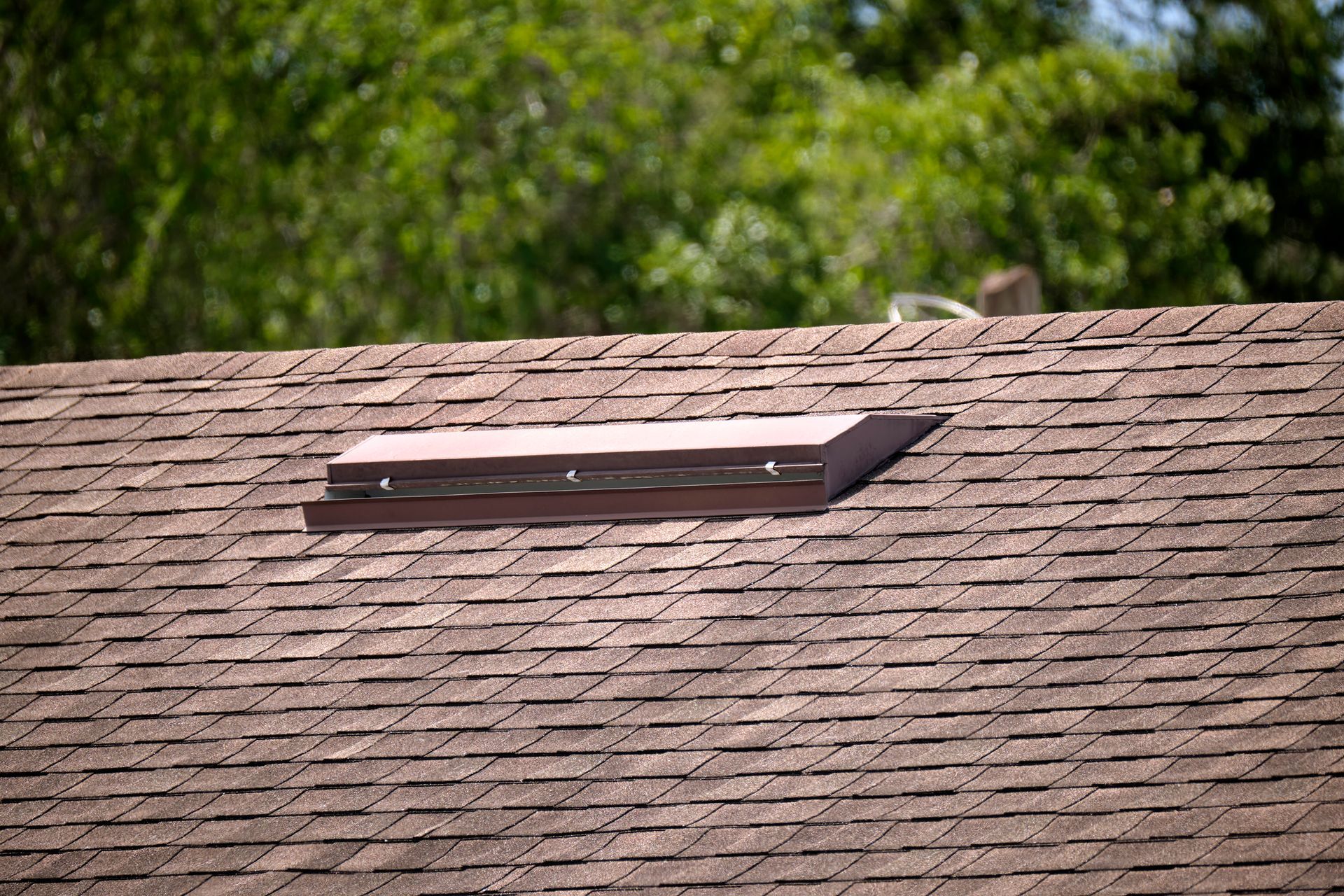
A box vent is a static exhaust vent installed near the upper roof area. It doesn't run continuously like a ridge vent, so you often need multiple vents to vent the whole attic evenly.
How Box Vents Work (Static Exhaust)
Box vents let warm air escape from the attic. Because each vent only affects the area around it, placement and spacing are everything.
Other Names Homeowners Hear (and What They Mean)
In CT, homeowners may hear several terms used loosely: turtle vent, static vent, louver vent, eyebrow vent. They all describe passive roof exhaust vents (not powered).
Roof Shapes Where Box Vents Fit Better (Short Ridges, Complex Layouts)
Box vents can be a better fit when the ridge length is too short to vent well, when the roof has multiple sections and peaks, or when certain attic areas need targeted exhaust.
Pros and Cons of Ridge Vents
Benefits (Coverage, Look, Consistent Exhaust)
Ridge vents are popular because they provide even exhaust and look clean. In many cases they also reduce the number of separate roof penetrations.
Drawbacks (Roof Design Limits, Weather Concerns, Install Considerations)
A ridge vent can underperform if the roof layout doesn't support it, or if intake is weak. In CT, it's important to use ridge vent designs that resist wind-driven rain and snow infiltration, and to install them correctly so the ridge is sealed and protected.
Pros and Cons of Box Vents
Benefits (Flexible Placement, Simpler Installs, Budget-Friendly)
Box vents give you flexibility. When the roof is complex, that flexibility can mean better real-world performance, because you can place exhaust where the attic needs it.
Drawbacks (More Penetrations, Aesthetics, Uneven Coverage if Spaced Poorly)
Box vents create more roof penetrations and therefore more potential leak points if flashing and sealing aren't done right. They can also look cluttered, and they can leave hot spots if there aren't enough vents or if spacing is off. If a penetration ever fails, you'll want to address it quickly, roof leak repairs in CT are far easier to manage when caught early.
Ridge Vent vs Box Vent Comparison (Side-by-Side)
| Category | Ridge Vent (Continuous Ridge Vent) | Box Vent (Roof Box / Turtle Vent / Static Vent) |
|---|---|---|
| Airflow coverage | More even along the roof peak | Depends on spacing; can leave hot spots |
| Intake needs | Must have strong soffit intake | Must have strong soffit intake |
| Roof penetrations | Fewer (one continuous system) | More (multiple penetrations) |
| Leak risk | Lower when installed correctly | Higher if any penetration is flashed poorly |
| Weather resistance (CT rain/snow) | Strong when using baffled/filtered designs | Strong when flashed correctly; placement matters |
| Appearance | Low-profile | More visible from the street |
| Best roof fit | Long ridges, simpler layouts | Complex layouts, short/broken ridges |
| Cost drivers | Ridge length + intake fixes | Number of vents + intake fixes |
What Works Best in CT: Decision Factors to Consider
Instead of picking a vent first, it helps to look at the "decision drivers" that actually change the outcome:
| Decision factor | What to check | Often favors… |
|---|---|---|
| Coastal vs inland exposure | Wind + wind-driven rain; humidity | Depends on vent design and install quality |
| Roof pitch / roof slope | Steep vs low slope changes how snow and water move | Either (with correct products) |
| Ridge length | Long, uninterrupted ridge vs short ridge | Long ridge → ridge vent |
| Soffit conditions | Continuous soffit vent present? Blocked? | Strong intake helps both |
| Older CT homes | Tight overhangs, limited soffits, no baffles | Either, but needs planning |
| Attic layout | Open attic vs finished/conditioned spaces | Depends on airflow paths |
| Warranty requirements | Manufacturer ventilation requirements | Whatever meets the spec |
Not sure which roofing materials work best for CT's climate overall? Our guide to the best roofing materials for the Northeast can help put ventilation choices in a broader context.
When to Choose a Ridge Vent in CT
Ideal Scenarios
A ridge vent is usually the best choice when you can create a true "bottom-to-top" airflow path. If your attic has open rafter bays and soffit vents that can breathe, ridge vents often provide the most consistent exhaust.
Situations Where Ridge Vents Need Extra Planning (Intake, Baffles, Roof Geometry)
Ridge vents need extra attention when intake is limited, when roof sections don't connect, or when the home has vaulted ceilings without clear vent channels. In those cases, the vent isn't the problem, the airflow path is.
When to Choose Box Vents in CT
Ideal Scenarios
Box vents are a solid solution when the roof ridge is short or the roof design is complicated. They can also work well on additions where the main roof ridge doesn't vent the added attic space.
How to Avoid Common Box-Vent Pitfalls (Placement, Spacing, "Too Few Vents")
Box vents don't like guesswork. The most common problems come from too few vents or vents placed where they don't serve the attic space. Good planning means:
- Using enough vents based on ventilation area needs
- Spacing them so the whole attic gets coverage
- Keeping them away from heavy water paths (like certain valley areas)
- Making sure soffit intake is open first
Why You Typically Shouldn't Mix Ridge Vents and Box Vents
How Mixing Exhaust Vents Can Short-Circuit Airflow
Mixing exhaust types (ridge vent + box vents) often creates a short circuit. Air can enter one exhaust vent and exit another, instead of pulling fresh air from the soffits and flushing the attic. The result is less useful airflow, especially down low where moisture tends to build.
What to Do Instead if Your Roof Has Multiple Sections
If your roof has separate attic zones, it's usually better to vent each zone intentionally, matching intake and exhaust for that section, rather than stacking multiple exhaust types on the same airflow path.
Ventilation Tips That Make Either Option Work Better
No matter which vent you choose, these details make a big difference in CT:
- Make intake continuous where possible. Clear soffit vents and consider continuous soffit venting when appropriate.
- Keep airflow paths open. Install baffles at eaves so insulation doesn't block intake.
- Avoid dead zones. Plan vent placement around roof sections, valleys, and separated attic areas.
- Protect against weather. Use vent products with the right baffles/filters/screens for rain and snow exposure.
- Don't create extra leak points. Every roof penetration must be flashed correctly, especially on older roof decks.
- Be careful with powered options. Turbine vents, powered roof vents, and solar attic fans can help in some cases, but they can also pull conditioned air from the home if intake and air sealing aren't handled first.
The Best Choice for Your CT Home
For many Connecticut homes, the best answer to ridge vent vs box vent comes down to two things: roof shape and intake ventilation. If you have a good soffit intake and a long ridge, a continuous ridge vent often delivers the most even attic ventilation with a clean look. If the roof is complex or the ridge is short, box vents can be the smarter fit, when they're sized and spaced correctly.
If you're unsure, the most reliable approach is an inspection-based check of your attic airflow path (intake, baffles, insulation clearance) and your roof layout (ridge length, pitch, sections). That's usually faster, and cheaper, than guessing and redoing vents later. If something doesn't look right after a seasonal storm, don't wait, roof repairs are always more straightforward before small issues become bigger ones.
Frequently Asked Questions
Can I add a ridge vent to my existing roof without replacing the whole roof?
Yes, in most cases. A ridge vent can be installed during a repair or as a standalone upgrade, it doesn't require a full roof replacement. A roofer will cut a slot along the ridge, install the vent, and cap it with ridge shingles. The more important question is whether your soffit intake is adequate first, because adding exhaust without fixing intake won't improve your attic's airflow.
How many box vents does a CT home typically need?
It depends on your attic's square footage and the net free area of the vents you're using, but a rough industry baseline is 1 square foot of ventilation (intake + exhaust combined) for every 150 square feet of attic floor space. For a 1,200 sq ft attic, that's roughly 8 sq ft of total vent area split between intake and exhaust. Under-venting is the most common mistake, when in doubt, have a contractor calculate your specific needs rather than guessing by count alone.
Will a ridge vent cause leaks in Connecticut's heavy snow and rain?
Not when it's the right product installed correctly. Quality ridge vents designed for northeastern climates include external baffles that deflect wind-driven rain and snow, plus internal filters to block debris. Problems typically come from using low-grade vents, improper installation, or a ridge that wasn't sealed properly at the ends. If you're in a high-exposure area or have a low-pitched roof, ask your contractor specifically about the vent's weather resistance rating.
Does attic ventilation affect my homeowner's insurance or roof warranty?
It can. Many shingle manufacturers require balanced attic ventilation as a condition of their warranty, if your ventilation doesn't meet their specs at the time of installation, a future claim could be denied. On the insurance side, documented ice dam damage is sometimes scrutinized for underlying causes like poor ventilation. It's worth checking your shingle manufacturer's ventilation requirements before committing to a vent type or configuration.
My house was built in the 1970s, do older CT homes need special ventilation considerations?
Yes, a few things are worth checking. Many older Connecticut homes have tight or enclosed soffits with little to no intake venting, shallow overhangs that make continuous soffit venting difficult, and attic insulation that's been blown in over the years without baffles to protect the eave channels. Before adding any exhaust vent, it's worth confirming that intake actually exists and is unobstructed, otherwise you're adding exhaust to a system that can't move air properly.